
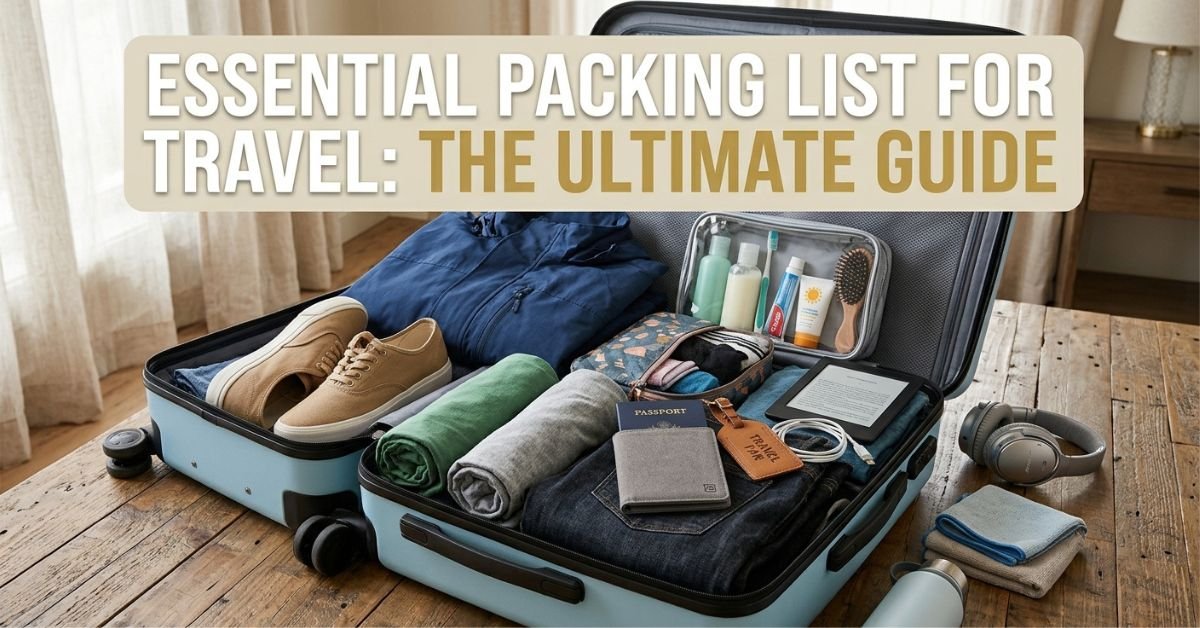
An essential packing list for travel helps you prepare for your trip without forgetting important items. Whether you are planning a weekend getaway, an international holiday, a family vacation, or a business trip, packing the right things can make your journey easier and more comfortable.
Many travelers either pack too much or forget essential items such as travel documents, medicines, chargers, and suitable clothing. A well-organized packing checklist helps you avoid these problems and ensures that you have what you need throughout your journey.
In this guide, you will discover what to pack for travel, how to organize your luggage, what to keep in your carry-on bag, and how to avoid common packing mistakes.Having an essential packing list for travel ensures you never forget your important documents and daily necessities.
Quick Checklist
Before closing your suitcase, review this basic travel packing checklist.
- Passport or other required identification
- Visa and travel documents, if needed
- Flight tickets and hotel reservations
- Wallet, bank cards, and some local currency
- Mobile phone and charger
- Suitable clothing and underwear
- Comfortable walking shoes
- Toiletries and personal hygiene products
- Prescription medicines and basic first-aid supplies
- Travel insurance details
- Power bank, if permitted by your airline
- Reusable water bottle
- Travel adapter for international trips
- Sunglasses, sunscreen, and weather protection
- Emergency contacts and important digital copies
Use this checklist as a starting point and adjust it according to your destination and travel plans.
1. Important Travel Documents
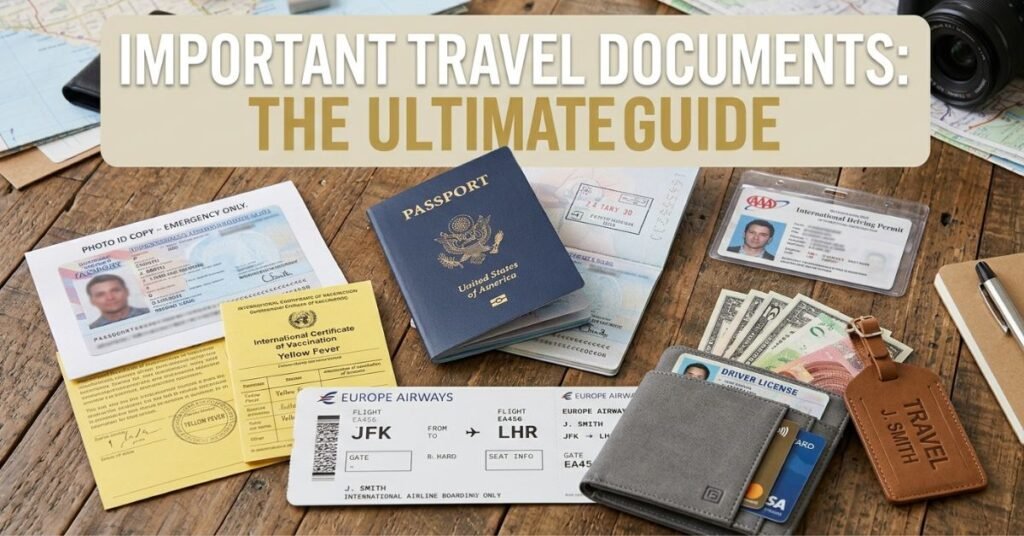
Travel documents should be at the top of your packing list because forgetting them can cause serious delays or even prevent you from boarding your flight.
Passport and Identification
For international travel, check that your passport is valid for your destination and travel dates. Some countries require several months of remaining passport validity, so confirm the rules before departure.
For domestic trips, carry the identification documents required by your airline or transport provider.
Keep your passport and identification in a secure, easily accessible place. Avoid placing important documents in checked luggage.
Visa and Entry Documents
Depending on your destination and nationality, you may need a visa, electronic travel authorization, arrival form, or other entry documents.
Check official government immigration websites before your trip. Entry requirements can change, so do not rely entirely on old travel articles or social media posts.
Tickets and Reservations
Keep copies of your flight tickets, hotel bookings, train tickets, and other important reservations. Digital copies on your phone are convenient, but offline copies can be useful when internet access is unavailable.
Travel Insurance
Travel insurance can help protect you against certain unexpected expenses, such as eligible medical costs, trip cancellations, or lost baggage. Read the policy carefully to understand what is covered and excluded.
2. Clothing and Footwear

Selecting versatile clothes that you can layer is a key part of any essential packing list for travel.The clothing you pack should match the weather, length of your trip, and activities you plan to enjoy.
Everyday Clothing
For most trips, consider packing:
- T-shirts or comfortable tops
- Trousers, jeans, or travel pants
- Underwear and socks
- Sleepwear
- Comfortable outfits for sightseeing
- One or two smarter outfits for restaurants or special occasions
Choose clothing that you can mix and match. Neutral colors and versatile pieces help you create different outfits without carrying too many items.
Weather-Appropriate Clothing
Check the forecast before leaving. Your packing list may need to include a warm jacket, raincoat, sweater, lightweight clothing, or thermal layers.
If you are visiting a cold destination, use layers instead of relying on one very thick item. For hot destinations, lightweight and breathable fabrics can improve comfort.
Comfortable Shoes
Walking is a major part of many vacations, so comfortable shoes are essential. Choose footwear that you have already worn rather than brand-new shoes that might cause blisters.
Depending on your activities, you may also need sandals, hiking shoes, or formal footwear.
Accessories
Useful accessories include a hat, sunglasses, belt, scarf, and compact umbrella. You do not need to pack every accessory; choose items that suit the destination and your planned activities.
3. Toiletries and Personal Care Items
Personal care products help you maintain your usual hygiene routine while traveling.
Your toiletries bag may include:
- Toothbrush and toothpaste
- Shampoo and conditioner
- Body wash or soap
- Deodorant
- Moisturizer
- Sunscreen
- Hairbrush or comb
- Razor and shaving products
- Menstrual hygiene products, if needed
- Contact lenses and their approved care products, if applicable
- Hand sanitizer and tissues
Travel-size containers can save space, especially when you are traveling with carry-on luggage.
For flights, check the current liquid, aerosol, and gel restrictions for your departure airport and airline. Rules vary by airport and route, so do not assume that every container will be accepted.
Place toiletries in a leak-resistant bag to protect your clothing from spills.
4. Electronics and Travel Gadgets
Electronic devices help you stay connected, navigate unfamiliar places, capture memories, and manage bookings.
Essential Electronics
Consider packing:
- Smartphone
- Phone charger
- Charging cable
- Power bank
- Headphones or earbuds
- Camera, if needed
- Tablet or laptop, if required
- Travel adapter for international destinations
You may not need every device. For a short holiday, a smartphone and charger may be enough.
Travel Adapter
Different countries use different plug types and electrical standards. Check whether your destination requires a travel adapter and whether your devices support its voltage.
An adapter changes the plug connection; it does not necessarily convert voltage. Devices that do not support the local voltage may require a suitable voltage converter.
Power Bank Safety
Power banks and spare lithium batteries generally need to be carried in cabin baggage rather than checked luggage. Airlines may apply capacity limits, restrictions on use, or other requirements.
Check your airline’s current rules before flying, particularly if your power bank has a high capacity. Keep its capacity label visible where possible.
Download Important Information
Before leaving, download boarding passes, maps, hotel details, translation tools, and entertainment you may need offline. This is especially useful when mobile data is expensive or internet access is unreliable.
5. Medicines and Basic First Aid
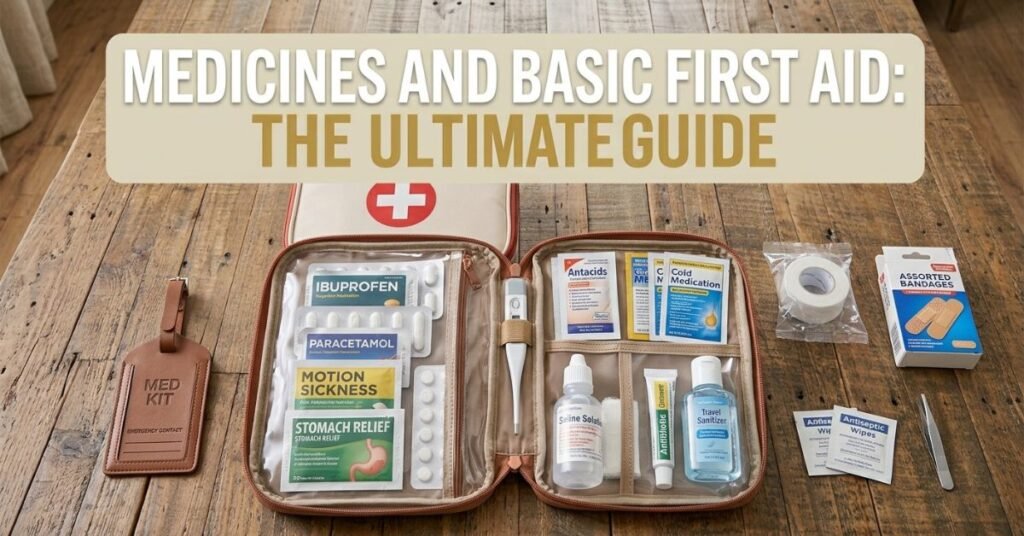
Every smart essential packing list for travel includes TSA-approved toiletries and a basic first-aid kit.Health-related supplies are an important part of a responsible travel packing list.
Pack any prescribed medication you normally need, along with enough for your trip and a reasonable contingency where appropriate.
Other useful items may include:
- Basic adhesive bandages
- Antiseptic wipes
- Blister pads
- Digital thermometer
- Oral rehydration salts, where appropriate
- Any familiar over-the-counter medicines you can safely use
Keep prescription medicines in their original labeled packaging when practical. Carry prescriptions or supporting medical documents if needed, particularly for international travel.
Some medicines that are common in one country may be restricted in another. Check the destination’s rules before carrying prescription or controlled medication across borders.
If you have specific medical needs, consult a healthcare professional before traveling. Do not rely on a basic first-aid kit as a replacement for professional medical care.
6. Money, Cards, and Banking Essentials
Access to money is necessary for transport, meals, accommodation, and unexpected expenses.
Pack the following items according to your needs:
- Debit or credit cards
- Some cash in the destination’s currency
- A secure wallet
- Emergency contact information for your bank
- A backup payment method
Before departure, inform your bank about travel if it recommends doing so. Check foreign transaction fees, ATM charges, and card security settings.
Avoid keeping all your cash and cards in one place. Separating backup funds from your everyday wallet can help if a bag is lost or stolen.
For international trips, consider how you will pay for transport and small purchases immediately after arrival.
7. What to Pack in Your Carry-On Bag
Choosing the right suitcase or backpack is the first step when creating an essential packing list for travel.Your carry-on bag should contain the items you need during the journey and anything that would be difficult to replace if your checked luggage were delayed.
A useful carry-on checklist includes:
- Passport and essential travel documents
- Wallet and payment cards
- Mobile phone and charger
- Necessary medication
- Headphones
- A change of clothes for longer trips
- Essential toiletries that comply with security rules
- Glasses or other essential personal items
- Snacks, where permitted
- An empty reusable water bottle to fill after security, where facilities are available
Keep valuable electronics and important documents with you rather than placing them in checked baggage.
Before packing, confirm your airline’s carry-on size and weight limits. The permitted number of bags and rules for particular items can vary by airline and route.
8. Travel Accessories That Make Your Trip Easier

A few compact accessories can make travel more convenient without adding much weight.
Packing Cubes
Packing cubes separate clothing into categories, such as tops, underwear, and sleepwear. They can make your suitcase easier to organize and help you find things quickly.
Reusable Water Bottle
A reusable bottle is useful for staying hydrated. Follow local drinking-water advice and use refill points where safe drinking water is available.
Small Daypack
A lightweight daypack is convenient for sightseeing, day trips, and carrying daily essentials. Choose one that is comfortable and offers secure storage.
Travel Pillow and Eye Mask
These items may help you rest during long flights, train journeys, or bus rides. They are optional, so consider how much space you have available.
Laundry Bag
A separate bag for dirty clothing keeps your clean clothes organized. For longer trips, a small amount of travel laundry detergent can also be useful if you plan to wash clothes.
9. What to Pack for Different Types of Trips
Your destination and activities should determine what goes into your luggage.
Beach Vacation Packing List
For a beach holiday, consider packing:
- Swimwear
- Beach sandals
- Sunscreen
- Sunglasses and a hat
- Lightweight clothing
- A beach towel, if your accommodation does not provide one
- A waterproof bag for wet clothing
Check the local weather and beach conditions before departure.
Cold-Weather Travel Packing List
For cold destinations, consider:
- Warm base layers
- Sweaters or insulating layers
- A suitable winter jacket
- Gloves
- Warm socks
- A hat and scarf
- Waterproof footwear, where necessary
For snow activities, choose clothing and equipment appropriate to the conditions rather than relying on ordinary winter clothes.
Business Travel Packing List
Business travelers may need:
- Work clothes
- Comfortable formal shoes
- Laptop and charger
- Presentation materials
- Notebook and pen
- Identification and booking details
- Any required work documents
Check that important digital files are available offline and backed up securely.
Adventure and Hiking Travel Packing List
For hiking or outdoor activities, useful items may include:
- Appropriate hiking shoes
- Weather-resistant clothing
- Water and a suitable hydration system
- Navigation tools
- A first-aid kit
- Sun protection
- A headlamp or flashlight
- Activity-specific safety equipment
The required equipment depends on the route, weather, terrain, and length of the activity. Research local safety advice before setting out.
10. How to Pack Light and Save Space

Packing light can make airport transfers, public transport, and hotel changes much easier.
Make a Packing Checklist
Write down what you need before placing anything in your suitcase. Check off each item as you pack it, and review the list before leaving home.
Choose Versatile Clothing
Select clothes that work together and can be used for several occasions. This reduces the need to pack a separate outfit for every day.
Roll or Fold Clothing Efficiently
Rolling some clothes can make them easier to arrange in a suitcase. Folding structured garments may help reduce creasing. Use whichever method works best for your clothing and luggage.
Avoid Packing Unnecessary Items
Before closing your suitcase, remove items you probably will not use. Check whether your accommodation provides towels, hairdryers, or basic toiletries.
Leave Some Extra Space
A little spare room can be useful for souvenirs, shopping, or items you collect during your trip.
Weigh Your Luggage
Check your suitcase’s weight before leaving home. This helps you avoid unexpected airline baggage fees and gives you time to remove unnecessary items.
11. Common Travel Packing Mistakes to Avoid
Even experienced travelers can forget important things. Avoid these common mistakes:
Packing at the last minute: Rushing makes it easier to forget documents, chargers, and medication.
Ignoring the weather: Check the forecast and prepare for likely conditions, including rain or temperature changes.
Overpacking: Too many clothes and unnecessary gadgets make luggage heavy and difficult to manage.
Putting everything in checked baggage: Keep essential documents, valuables, and necessary medication in your carry-on where permitted.
Ignoring airline restrictions: Check baggage dimensions, weight limits, liquid rules, battery restrictions, and prohibited items before departure.
Forgetting destination-specific requirements: Visa rules, health recommendations, plug types, and local laws may differ from those at home.
Relying only on internet access: Save essential travel details offline in case your connection fails.
12. When Should You Start Packing for a Trip?
For most trips, starting your preparations several days in advance is a sensible approach. International travel may require more time because you might need to arrange visas, confirm entry requirements, or obtain special equipment.
Use this simple timeline:
- One week before: Check your documents, weather, accommodation, and airline baggage rules.
- Two to three days before: Prepare clothing, toiletries, electronics, and other nonessential items.
- The day before: Pack your bags, charge your devices, confirm transport details, and review your checklist.
- Before leaving home: Check your passport, wallet, phone, keys, tickets, and necessary medication.
Adjust this schedule according to the complexity of your trip.
Final Thoughts
An essential packing list for travel helps you prepare for your journey, avoid common mistakes, and keep your belongings organized. Start with travel documents, clothing, toiletries, electronics, medication, and money. Then add items that match your destination, weather, and planned activities.
Remember that the best packing list is not necessarily the longest one. It is the list that includes everything you genuinely need without filling your luggage with unnecessary items.Double-checking your essential packing list for travel before leaving home guarantees a stress-free trip.
Before departure, review your checklist, confirm your airline’s baggage rules, and check the latest travel requirements for your destination. With a little preparation, you can begin your trip feeling more organized, comfortable, and ready to enjoy the experience.
FAQs
1. What are the most important things to pack for travel?
Important items include identification, required travel documents, money, a phone and charger, suitable clothing, necessary medication, and personal hygiene products.
2. What should I pack for a seven-day trip?
Pack clothing that can be mixed and matched, enough underwear and socks, comfortable shoes, toiletries, electronics, documents, and any medication you need. Consider laundry facilities and the weather before deciding how many outfits to take.
3. What should I keep in my carry-on bag?
Keep essential documents, valuables, necessary medication, your phone, chargers, and other items you may need during the journey in your carry-on, subject to airline and security rules.
4. How can I avoid overpacking?
Create a checklist, choose versatile clothing, pack only what you expect to use, and check your luggage weight before departure.
5. Should I pack medicines when traveling?
Carry your regular prescribed medication and any appropriate personal medical supplies. Check the destination’s rules for medicines, especially when traveling internationally.
6. Do I need a travel adapter?
You may need one if the plug type at your destination differs from the plugs used by your devices. Check electrical compatibility as well as plug shape.
7. Can I put a power bank in checked luggage?
Power banks and spare lithium batteries generally must be carried in cabin baggage, subject to airline capacity limits and other restrictions. Always confirm the current rules with your airline.
8. How early should I pack before traveling?
Preparing several days in advance is helpful. For international trips or journeys with special equipment requirements, start earlier to allow time for documents and other arrangements.
