
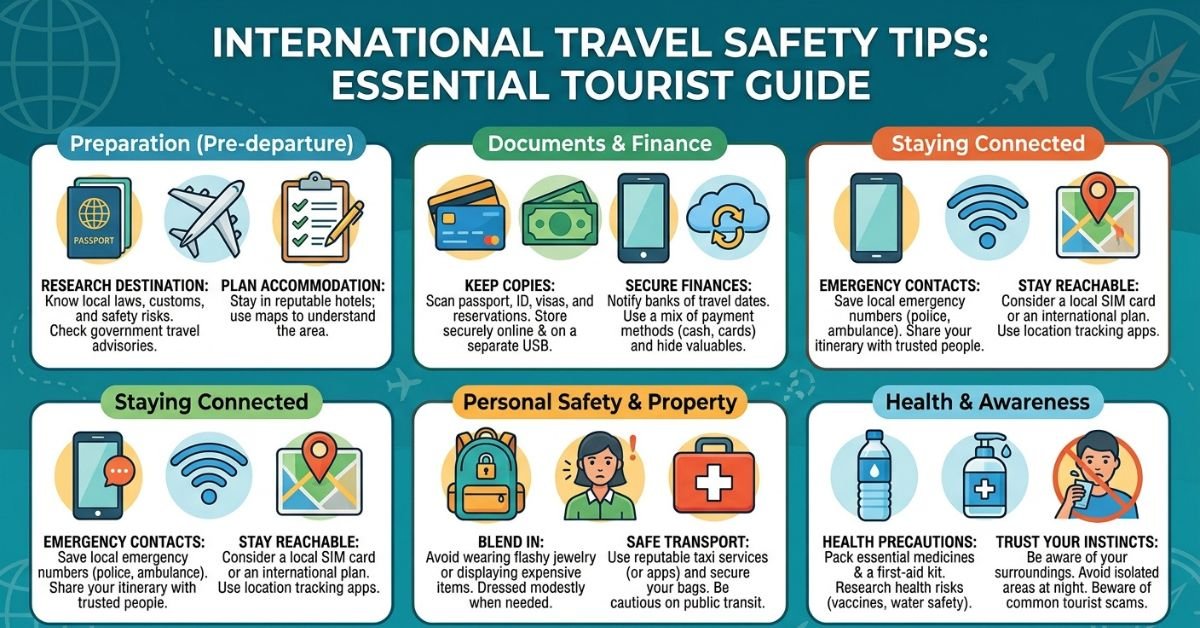
Following essential international travel safety tips ensures a secure, worry-free vacation in any foreign destination. Whether you plan a solo backpacking trip or a family holiday, proper security preparation protects your money, health, and valuable personal documents. In this comprehensive guide, we cover emergency action plans, smart packing advice, scam awareness, and health measures.
However, traveling abroad also comes with certain risks. These may include lost passports, travel scams, health problems, transportation accidents, theft, and unexpected emergencies. Understanding basic safety precautions can help you prepare for these situations and avoid unnecessary stress.
In this guide, you will learn how to prepare for international travel, stay safe at airports and hotels, protect your money and personal information, and handle emergencies while visiting another country.
1. Research Your Destination Before Traveling
One of the most important international travel safety tips is to research your destination before departure.
Every country has different laws, customs, transportation systems, health risks, and safety conditions. Learning about these factors can help you avoid problems during your trip.
Before leaving, research:
- Local laws and cultural customs.
- Areas that travelers should avoid.
- Common scams targeting tourists.
- Local transportation options.
- Weather conditions and seasonal risks.
- Emergency telephone numbers.
- Entry requirements and travel restrictions.
2. Keep Your Passport and Travel Documents Safe
Your passport is one of your most important travel documents. Losing it abroad can create significant delays and complications.
Before traveling, check that your passport is valid for the entire trip and meets your destination’s entry requirements. Some countries require several months of remaining validity beyond your planned arrival or departure date.
You should also organize the following documents:
- Passport and visa, if required.
- Flight tickets and accommodation confirmations.
- Travel insurance information.
- Copies of important identification documents.
- Prescriptions or medical documents, if needed.
- Emergency contact details.
Keep digital copies of important documents in a secure account and maintain a separate backup where practical. A printed copy may also be helpful.
Do not keep every original document and backup in the same bag. Store your passport securely and carry it when required by local law or official procedures.
If your passport is lost or stolen, contact local police when appropriate and reach your country’s nearest embassy or consulate for instructions.
3. Buy Suitable Travel Insurance
Travel insurance can provide financial protection against certain unexpected events during an international trip. Depending on the policy, coverage may include emergency medical treatment, medical evacuation, trip cancellation, travel delays, or lost luggage.
Before purchasing a policy, read its terms carefully.
Check whether it covers:
- Emergency medical expenses.
- Hospital treatment and evacuation.
- Pre-existing medical conditions, if relevant.
- Activities such as skiing, diving, or hiking.
- Trip interruptions and cancellations.
- Lost or stolen belongings.
Coverage limits, exclusions, deductibles, and claim requirements vary between insurers. Some policies exclude particular activities or events, so do not assume every situation is covered.
Keep your insurer’s emergency contact details accessible. If you need medical care or experience a covered incident, follow the insurer’s notification and documentation requirements.
Travel insurance cannot prevent every problem, but suitable coverage may help reduce the financial impact of an emergency.
4. Protect Your Money and Bank Cards
Financial safety is essential when traveling internationally. Losing access to your money can make even a short trip stressful.
Avoid keeping all your cash, cards, and identification in one place. Carry only the money you reasonably need for the day and keep a backup payment method separate.
Follow these precautions:
- Inform your bank about international travel if required.
- Check foreign transaction fees and withdrawal limits.
- Use ATMs in secure, well-lit locations.
- Cover the keypad when entering your PIN.
- Never share your banking password or one-time verification code.
- Check transactions regularly for suspicious activity.
- Keep your bank’s official contact information available.
Be careful when exchanging currency. Compare exchange rates and fees, and use reputable exchange services.
When paying by card, check the amount before confirming the transaction. If a payment terminal offers a choice between your home currency and the local currency, compare the displayed exchange rate and fees before selecting an option.
If a bank card is lost or stolen, freeze or cancel it through your bank’s official app or contact service as soon as possible.
5. Stay Safe at Airports and on Flights
Airports can become crowded and confusing, especially when you are visiting a country for the first time. Staying alert helps you protect your belongings and avoid missed connections.
Arrive with enough time for check-in, security screening, and immigration procedures. Keep your passport, boarding pass, and essential documents accessible but secure.
Never leave your bags unattended, even for a short period. Be cautious if strangers ask you to carry packages or luggage on their behalf.
For a safer flight experience:
- Follow airline baggage and security rules.
- Keep essential medication in your carry-on bag when appropriate.
- Check your flight status before leaving for the airport.
- Use official airport transportation or recognized pickup services.
- Confirm the driver’s identity and vehicle details before entering a booked ride.
At immigration and customs, answer questions honestly and follow official instructions. Never carry prohibited items or agree to transport unknown packages for another person.
6. Choose Safe Accommodation
Your hotel or rental accommodation should be comfortable, conveniently located, and reasonably secure.
Before booking, research the neighborhood and read recent reviews from multiple sources. Look for information about security, cleanliness, transportation, and access to essential services.
When you arrive:
- Confirm that doors and windows lock properly.
- Learn how to exit the building during an emergency.
- Keep your room key or access card secure.
- Avoid publicly sharing your room number.
- Use the room safe if appropriate, but do not assume it guarantees protection.
- Keep valuable items out of sight.
If something about the accommodation feels unsafe, contact the property manager or move to another suitable location if necessary.
When using vacation rentals, book through reputable platforms and be cautious about requests to make unexpected payments outside the official booking system.
7. Avoid Tourist Scams and Theft

Tourists may be targeted by scams because they are unfamiliar with local prices, customs, and transportation systems.
Common warning signs include unsolicited offers, unexpected fees, pressure to make immediate payments, and requests for personal or banking information.
To reduce your risk:
- Agree on taxi fares when appropriate, or use a reputable metered service.
- Check restaurant menus and prices before ordering.
- Be cautious of strangers offering unsolicited help with money or tickets.
- Avoid displaying expensive jewelry, cameras, or large amounts of cash.
- Keep bags closed and close to your body in crowded places.
- Be alert around busy markets, public transport, and major tourist attractions.
Not every friendly stranger has bad intentions, and local people can be extremely helpful. The goal is to stay aware without treating everyone with suspicion.
If you suspect a scam, decline politely, move to a public place, and contact local authorities if you feel threatened or have been harmed.
8. Use Safe Transportation
Transportation safety is important whether you are traveling by taxi, train, bus, rental car, or local transport.
Research the most reliable transportation options before arrival. Official airport taxis, licensed operators, recognized ride-hailing services, and established public transportation systems can help reduce uncertainty.
When using a ride-hailing service, verify the vehicle’s registration details and the driver’s identity before getting in. Share your journey details with a trusted person when appropriate.
If you rent a car, learn the local driving laws, speed limits, road signs, and parking rules. Check whether your driving license is accepted and whether an international driving permit is required.
Always wear a seat belt, avoid driving when tired, and never drive under the influence of alcohol or drugs. Motorcyclists and cyclists should use suitable helmets and follow local road rules.
If you use public transportation, check your route in advance and remain aware of your belongings, especially during crowded journeys.
9. Protect Your Health While Traveling
Health precautions can help you enjoy your trip and reduce the chance of illness.
Before departure, review recommended vaccinations and health guidance for your destination. A healthcare professional or travel clinic can advise you based on your medical history and planned activities.
Pack a small travel health kit with essential supplies, personal medication, and basic first-aid items. Keep prescription medicines in their original packaging where possible, and check whether they are legal in your destination country.
Other useful precautions include:
- Drink safe water according to local health guidance.
- Wash your hands regularly.
- Choose food from hygienic establishments.
- Protect yourself from strong sunlight.
- Use suitable insect repellent where needed.
- Take breaks and stay hydrated during long journeys.
If you have a medical condition, carry relevant medical information and know how to access healthcare at your destination.
10. Keep Your Phone and Personal Data Secure
Your phone often contains valuable personal information, including banking apps, email, travel bookings, photographs, and identification documents.
Before leaving home, install software updates and enable a strong screen lock. Activate device-tracking and remote-lock features if available, and back up important information.
While abroad:
- Avoid conducting sensitive financial transactions on unfamiliar public computers.
- Be careful with public Wi-Fi networks.
- Use a trusted mobile connection or reputable VPN when appropriate.
- Enable two-factor authentication on important accounts.
- Do not scan suspicious QR codes or open unexpected links.
- Keep your phone physically secure in crowded places.
If you use public Wi-Fi, make sure websites and apps are legitimate before entering personal information. A VPN can add privacy in some situations, but it does not make every online activity automatically safe.
If your phone is stolen, use the official device-management service to lock it or erase it remotely where possible. Change important passwords and contact your mobile provider if necessary.
11. Respect Local Laws and Cultural Traditions
Respecting local customs helps prevent misunderstandings and makes your travel experience more positive.
Some countries have strict rules about clothing, photography, alcohol, medication, public behavior, or religious sites. Actions that are normal in one country may be considered inappropriate or illegal in another.
Before visiting religious or historic locations, check the dress code and photography rules. Ask permission before photographing people, particularly in private or sensitive settings.
Avoid arguments about local laws with officials. If you do not understand a rule or instruction, ask politely for clarification.
Remember that your passport does not exempt you from local laws. Researching regulations before departure can help you avoid fines, delays, or more serious legal consequences.
12. Prepare for Emergencies
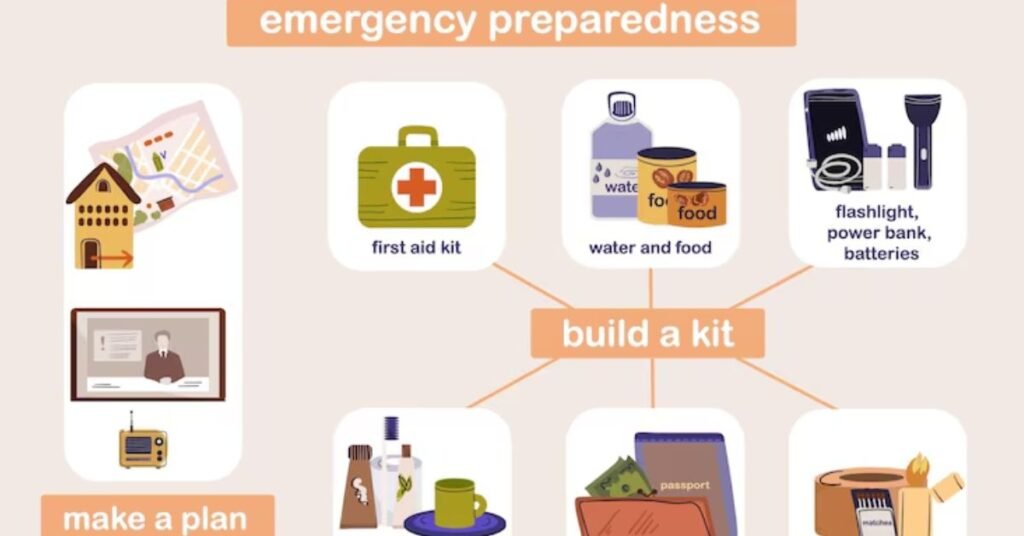
Even well-planned trips can involve unexpected situations. Preparing an emergency plan before departure can make it easier to respond calmly.
Save the following information:
- Local emergency telephone numbers.
- Your country’s embassy or consulate contact details.
- Travel insurance emergency assistance.
- Accommodation address and contact number.
- Contact information for family or trusted friends.
- The location of nearby hospitals, where relevant.
Share your itinerary with someone you trust and let them know if your plans change significantly.
If you are caught in a natural disaster, civil disturbance, or other emergency, follow instructions from local authorities and consult official alerts. Avoid approaching dangerous areas to take photographs or videos.
If you are in immediate danger, move to a safer location and contact the appropriate emergency service as soon as possible.
International Travel Safety Checklist
Before leaving home, make sure you have completed these important steps:
- Check your passport, visa, and entry requirements.
- Review official travel advisories.
- Purchase suitable travel insurance.
- Save copies of important documents.
- Inform your bank if necessary.
- Arrange safe airport transportation.
- Research your accommodation and neighborhood.
- Pack necessary medicines and health supplies.
- Secure your phone and online accounts.
- Save emergency contacts and share your itinerary.
Final Thoughts
International travel can be a rewarding experience when you prepare carefully and make sensible decisions. Researching your destination, protecting your documents, choosing reliable transportation, avoiding scams, and maintaining good health habits can help you reduce common travel risks.
The best international travel safety tips are practical habits that you can follow throughout your journey. Stay aware of your surroundings, respect local customs, protect your personal information, and know where to seek help if an emergency occurs.
You cannot eliminate every risk, but thoughtful preparation can help you travel with greater confidence and enjoy your time abroad.
FAQs
What are the most important international travel safety tips?
Research your destination, secure your documents and money, purchase suitable travel insurance, stay aware of your surroundings, and prepare for emergencies.
How can I keep my passport safe abroad?
Store it securely, keep a backup copy separate from the original, and carry it when required by local law or official procedures.
Is travel insurance necessary for international travel?
Travel insurance is strongly worth considering because medical treatment, evacuation, cancellations, and lost belongings can be expensive. Check the policy for coverage and exclusions.
How can I avoid travel scams?
Use reputable transportation and booking services, confirm prices before paying, protect your banking information, and be cautious of pressure tactics or unexpected requests for money.
Is public Wi-Fi safe while traveling?
Public Wi-Fi can carry security risks. Use trusted networks, keep your device updated, and avoid entering sensitive information into suspicious websites or apps.
What should I do if I lose my passport abroad?
Report the loss when appropriate and contact your country’s nearest embassy or consulate for guidance on obtaining an emergency travel document or replacement passport.
How can I stay healthy during an international trip?
Follow destination-specific health advice, maintain good hygiene, drink safe water, carry essential medication, and seek professional medical care when needed.
